
For the merchant
Sell without living inside every chat.
- Stock truth on site and WhatsApp
- GST invoices
- Holds that do not double-sell
Catalogue, WhatsApp selling, order status and returns, grounded in live inventory. Fashion, grocery, electronics, craft, wholesale — if you sell a SKU, the site and the chat should share a count.
Built for D2C brands, retailers, marketplaces-in-miniature and catalogue businesses.
Scope this with usThe problem
Shoppers abandon when a question about size, stock or spec sits unanswered. Post-purchase ‘where is my order’ buries the desk. A piece gets double-sold because the site and WhatsApp do not share a count.
In practice
A shopper asks whether it is in stock, what the spec actually is, and when it would arrive. The layer answers from the product record, checks that this SKU is still unsold, and explains the return window — or hands a high-value consult to a human with the order already open.
One
Count across site and WhatsApp
A sold SKU stays sold
Grounded
Product answers
From the record, not a generic FAQ
Down
WISMO load
Status from the order, not the inbox
Human
High-value consults
Custom, wholesale and exceptions still reach a person
The shift
From this
To this
What's included
The fields that matter for what you sell — variants, materials, care, warranty. The PDP is evidence, not adjectives.
Repeatable SKUs, made-to-order, or one-of-a-kind — with holds that expire.
The number the house owns. Photos, availability, partial payments — written to the order.
UPI, cards, invoices a CA will accept. No surprise charges after the chat.
Packed, shipped, out for delivery — from the system, in the thread.
Policy-aware. Custom, wholesale and high-value cases route to a human.
The list that wants the next drop, without spamming everyone.
High-value conversations leave the bot with the SKU, budget and context attached.
Every role connected
Sell without living inside every chat.
WISMO leaves the queue. The hard cases still reach you.
Go-live
Week 1
Fields that matter for your category: variants, stock type, care, whatever the shopper actually asks.
Week 2
Same inventory, same holds. House number, not a personal chat.
Week 3
Payment, invoice, status, the courier you actually use.
Week 4
Policy, exceptions, the path that must stay human.
Example live build
An example, not the only category
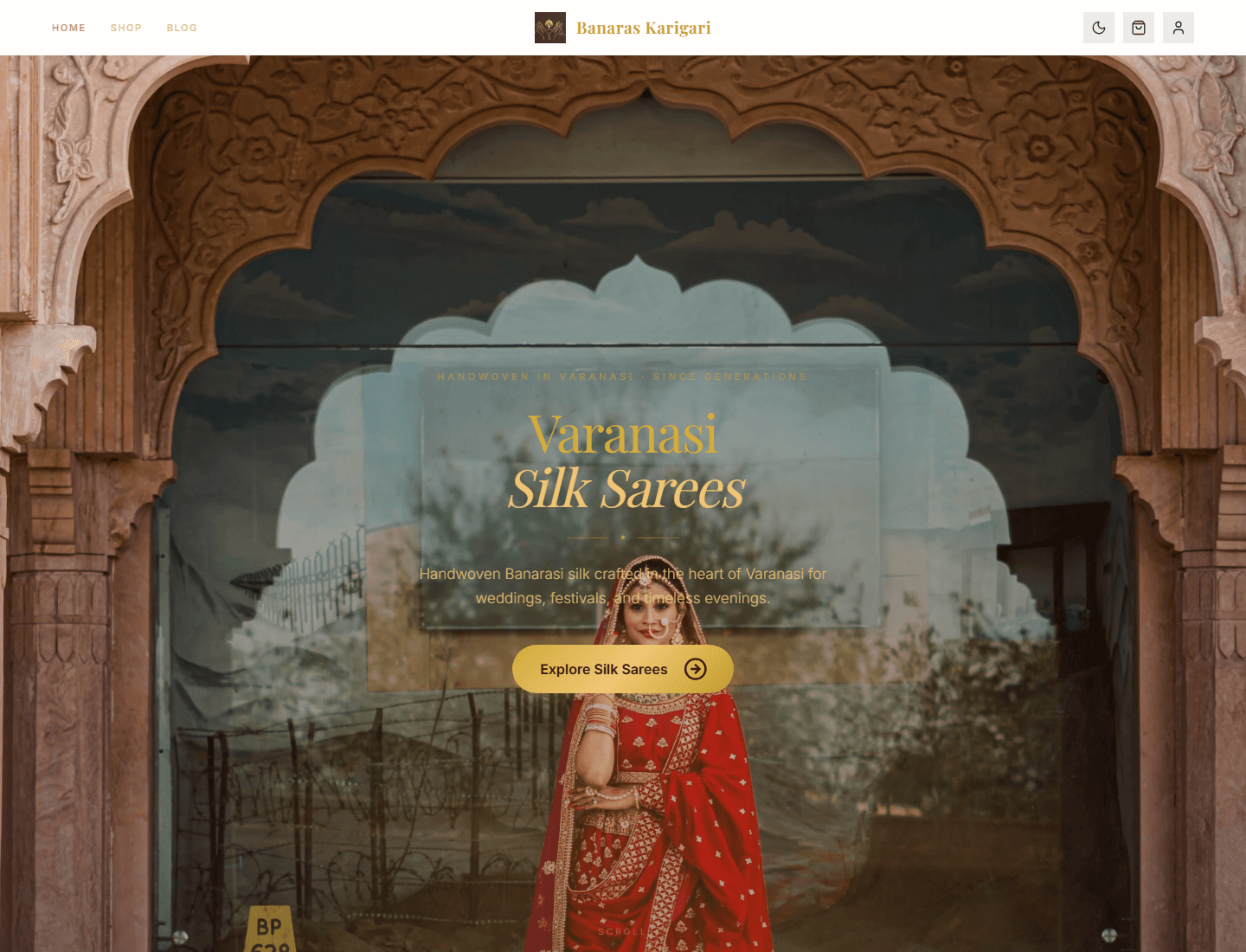
A Banarasi silk storefront: honest product records, checkout, and room to grow without double-selling a piece. Fashion, grocery, electronics, wholesale — your catalogue is different; the storefront-and-order layer is the same idea.
Ideal for
Anyone selling a catalogue who needs the site and WhatsApp to share a count
Deployment
Cloud storefront plus the WhatsApp number the house owns
Commercials
Scoped per catalogue complexity — unique pieces vs repeatable SKUs
We connect catalogue, inventory and orders so pre-sale answers and post-sale status are the same truth.
Each product carries the fields that matter for that category — size, material, variant, care, warranty — not a generic blurb.
WhatsApp and the site share stock so a conversation cannot sell what just sold.
Returns and exchanges stay inside policy; exceptions reach a human with the order open.
FAQ
No. The live example is a silk storefront. The build is a storefront-and-order layer for any catalogue — fashion, grocery, electronics, wholesale, or one-of-a-kind.
Yes. Unique pieces, made-to-order, and repeatable lines — with holds, and a hard stop so WhatsApp cannot sell what the site just sold.
No. Answers come from the product record. If the field is empty, it says so and routes a human.
Bring a dozen SKUs — any category — and the WhatsApp that currently sells them. You leave with a written plan for storefront, holds and order status.
We’ll tell you if a platform already fits better.
A 30-minute discovery call to research the use case together. You leave with a written plan — we'll tell you if a platform already fits better.